Solar Panel Installation: What You Need to Know
Why Now Is the Perfect Time to Invest in Solar Panels
With energy costs remaining a concern and the UK continuing its transition to renewable power, solar panels can help households generate more of their own electricity. Learn what to consider before installation and how EPC Improvements can help.
1. Government Incentives: Domestic solar installations are VAT-free, and schemes like Smart Export Guarantee (SEG) allow you to sell excess energy back to the grid.
2. Rising Energy Costs: Solar panels let you generate your own electricity, protecting you from ever-increasing energy prices.
3. Technological Advancements: Modern solar panels are more efficient than ever, making them suitable for UK weather conditions.
4. Environmental Impact: Reduce your carbon footprint and contribute to the UK’s net-zero goals by 2050.
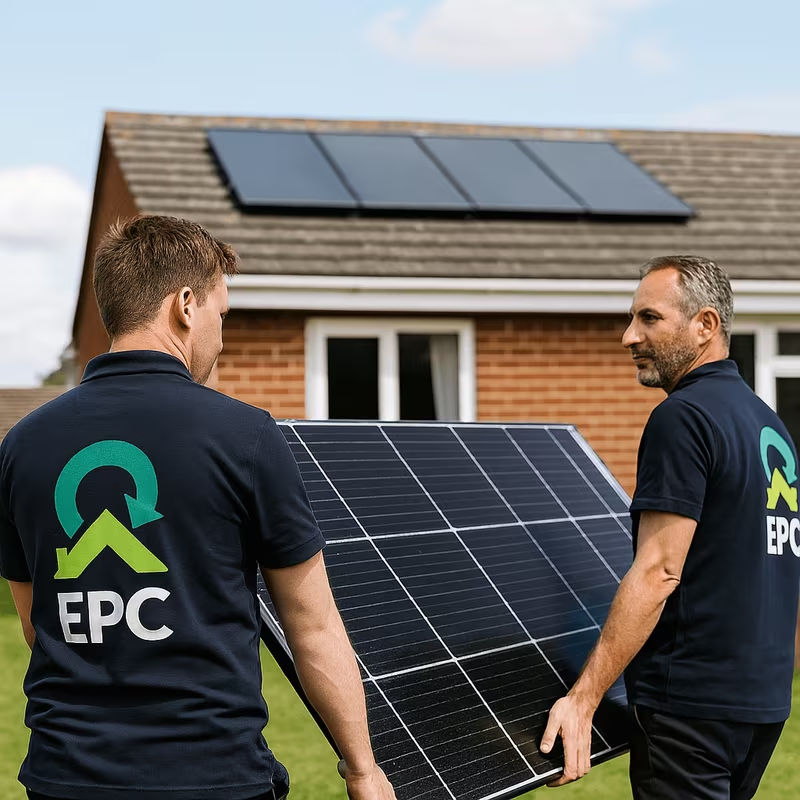
5. Expert Installation by EPC Improvements: With years of experience and thousands of installations completed, we ensure your solar panel system is designed to maximise energy savings and performance.
Conclusion:
Switching to solar panels is a smart investment for your home and the planet. Contact EPC Improvements today to explore your options and start saving with solar energy.
Is your home suitable for solar panels?
A useful assessment starts with the roof rather than a standard package. The installer should consider its usable area, orientation, pitch, shading, condition and the position of chimneys, rooflights and vents. A roof does not have to face due south, but the expected generation should reflect the property’s actual conditions.
The survey should also consider the electrical installation, meter position, consumer unit, cable routes and a safe location for the inverter and any battery. If roof repairs are likely during the life of the system, completing them before the panels are fitted can avoid unnecessary removal and refitting costs.
Design the system around how you use electricity
Panel count alone does not determine whether a design is right. A good proposal compares expected generation with the household’s electricity use, including when that electricity is normally consumed. It should explain the assumptions behind the forecast rather than promising a fixed saving.
Battery storage may increase the proportion of solar electricity used in the home by storing surplus generation for later. The appropriate capacity depends on consumption, available generation, tariffs, future plans and whether backup power is required. Solar-only and solar-plus-battery options should be compared on the same assumptions.
What happens during installation?
Once the design and quotation are agreed, the installer confirms access, scaffolding, equipment positions and the installation programme. Roof fixings, mounting rails and panels are installed before the DC cabling is connected to the inverter. The system is then connected to the property’s electrical installation, tested and commissioned.
The duration depends on the property and system complexity. Weather, roofing work, network approval and battery installation can all affect the programme. You should be told what access is needed, when power may be interrupted and who is responsible for each stage.
Paperwork and handover
After commissioning, the installer should explain how to operate and monitor the system and provide the relevant handover documents, warranties and electrical certification. Where applicable, MCS certification supports applications for export payments such as the Smart Export Guarantee.
Keep the design, test results, product details and warranty information together. Monitoring generation over time makes it easier to identify unexpected changes and gives your installer useful information if support is needed later.
Questions to ask before accepting a quotation
What annual generation is forecast, and which shading and orientation assumptions were used?
Which panels, inverter and battery are included, and what warranties apply?
Does the price include scaffolding, electrical work, monitoring and handover documentation?
Are network applications or notifications required, and who will complete them?
What aftercare is available if the system or monitoring platform needs attention?
What a clear solar proposal should show
The proposed equipment and usable roof layout
Annual generation estimate and its shading assumptions
Expected on-site use, export and any battery assumptions
Scaffolding, electrical work and network application responsibilities
Product, workmanship and performance warranties
Monitoring, handover and aftercare arrangements