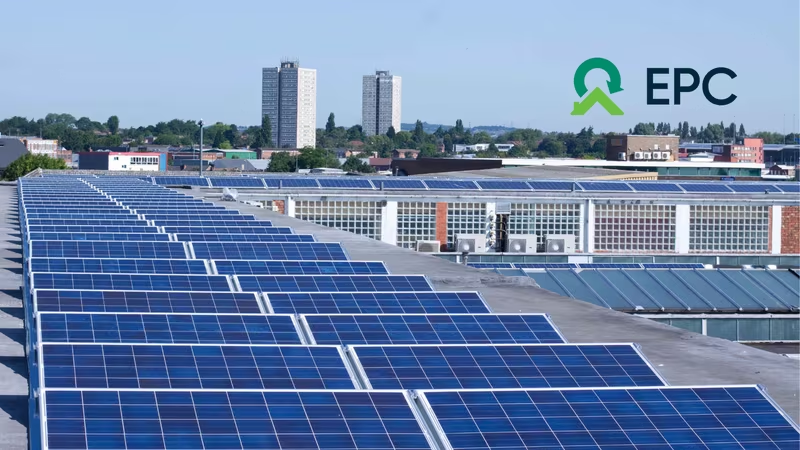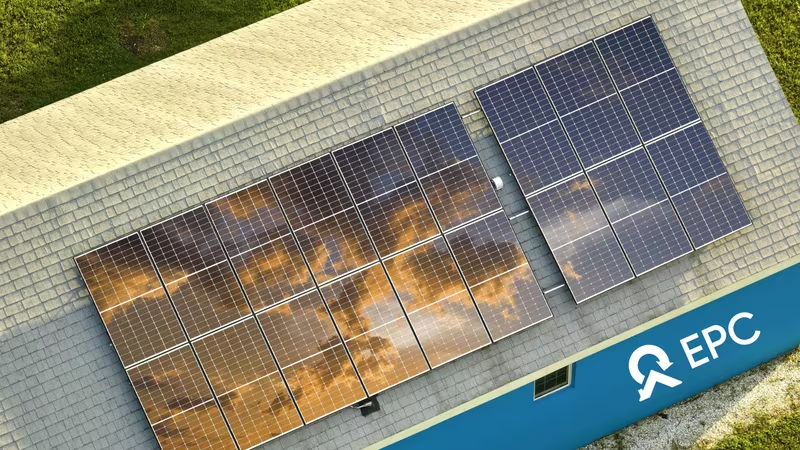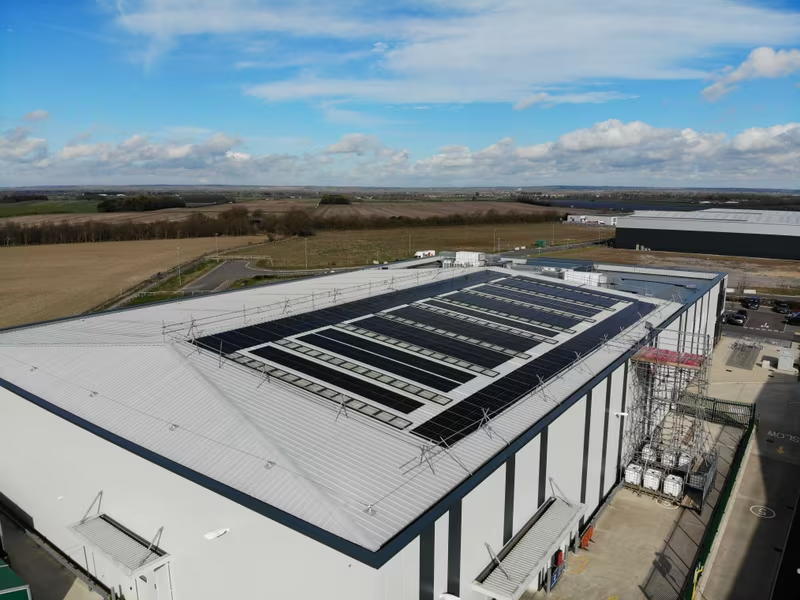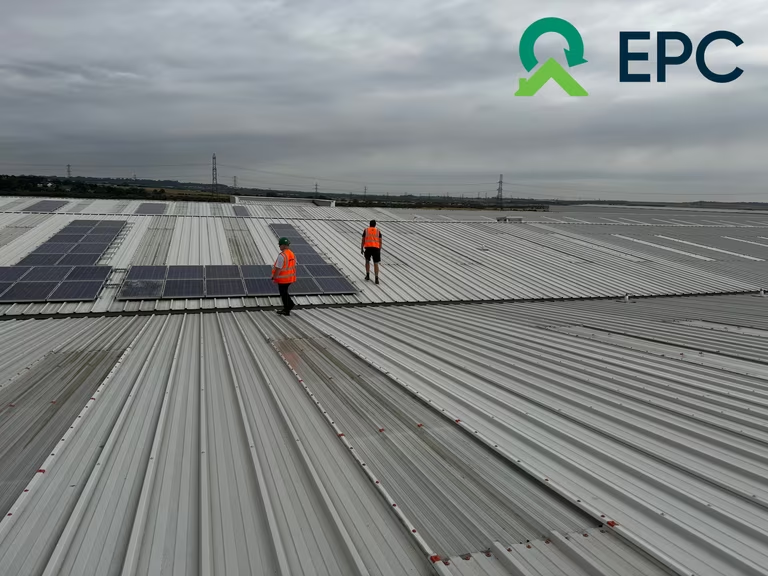
Plus, for commercial solar, Essex is a prime location, as its relatively sunny weather often provides businesses across the region with excess energy.
With a commercial solar installation, you can turn your roof or spare land into an energy source, helping you save money and contribute to a greener planet. In some cases, you can start generating income from your solar panels, thanks to government incentives.
In this article, we’ll run you through the seven main benefits of commercial solar installations in Essex.
The 7 Benefits of Commercial Solar for Essex Businesses
Commercial solar panel installation can transform the fortunes of a business, reducing costs, helping to meet green requirements, and more.
1. Reducing energy costs
A well-sized commercial solar system can supply part of a site’s daytime electricity demand. The proportion used on site and the resulting bill reduction must be modelled from the organisation’s actual consumption and the proposed generation profile.
Payback is site-specific. A proposal should show the capital or finance cost, forecast annual generation, expected self-consumption, import savings, export income, operating costs and the assumptions used for future prices.
2. Potential to Generate Income
Eligible exported electricity may receive payment through a Smart Export Guarantee tariff. Export income is based on measured export and the supplier’s current terms; organisations should obtain tax and VAT advice for their own circumstances.
For businesses, SEG payments are considered as trading income, meaning you’ll have to pay tax on them. SEG payments aren’t subject to VAT, however, so they can be offset against other taxable income. This means they can be used to reduce your corporation tax liability.
3. Increased Sustainability and Positive Environmental Impact
Solar power is about as clean as it gets where energy is concerned. After all, it generates electricity from the greatest heat source of them all: the sun. Once your panels are installed, your business’ reliance on fossil fuels will dip.
As a result, your business’ carbon footprint will shrink, helping you contribute to a greener, environmentally-friendly future.
This will have a positive impact on multiple fronts, as it will help to improve the outward reputation of your company. Customers are becoming more environmentally conscious, and are more attracted to companies that take visible steps to reduce their environmental impact.
4. Future-proofing Your Business
Wholesale and retail energy prices can rise or fall. Generating electricity on site can reduce exposure to imported electricity prices, but it does not remove grid charges or guarantee a particular future saving.
On-site solar electricity generation will help you on the way towards energy independence. Rising energy costs will have a minimal impact on your business, as you’ll be producing much of your own energy.
5. Optional Backup Resilience
Power outages can shut down a business’ operation at any time; a la Heathrow power outage of March 2025. Even losing half a day’s work to a temporary blackout can have a significant impact on your business’ finances. Solar panel systems, if they have battery storage and a relay switch to isolate you from the grid, can ensure continuity during outages.
6. Low Maintenance
Solar PV generally has limited routine maintenance, but inspection and cleaning needs depend on the site, roof, environment, monitoring data and manufacturer guidance rather than a fixed interval.
Servicing on a commercial solar system is only required every three to five years, or if there is a noticeable issue with the system. As many commercial buildings have flat roofs, solar panel servicing is much simpler than it would be on residential sloped roofs.
7. Compliance With Environmental Requirements
Businesses across Essex and the UK are required to be more transparent about their emissions as the UK aims to hit net zero by 2050. Having a commercial solar panel system, alongside other renewable energy sources, will help you meet any current and future guidelines regarding sustainability.
How to assess commercial solar savings
Ask for a proposal that makes its inputs visible. This allows decision-makers to compare options on the same basis and test how the result changes if electricity prices, site demand or export rates differ from the forecast.
Use at least 12 months of electricity data, including half-hourly data where available.
Compare annual generation with the times the site consumes electricity.
Separate avoided import costs from export income.
Include capital or finance costs, maintenance, inverter replacement and roof-access requirements.
State degradation, downtime, tariff and inflation assumptions.
Model planned changes such as electric vehicles, heat pumps, cooling or additional machinery.