THE STARTING POINT
Do you need a battery with solar panels?
No. A battery is optional. Solar panels generate electricity that your home can use while it is being produced. Surplus may be exported, or stored if a suitable battery is installed. Energy Saving Trust’s solar guidance explains these routes. Storage changes when electricity is available to you; it does not make the panels generate more.
Start by asking for a sound solar design, then examine what adding a battery changes. A combined package can be convenient, but the panels and the storage still need separate explanations. If an installer recommends both, you should understand the reason for each.
Look at when you use electricity
An annual bill shows how much you buy, but not when you need it. Gather twelve months of bills and half-hourly consumption data if available. Add a short description of your routines: working hours, cooking, hot water and electric-car charging. For an existing solar system, include generation and export records.
Ask the installer to distinguish measured information from estimates. A proposal for a home that is usually empty during the day should not quietly assume everyone works from home. Equally, an occasional evening peak should not be treated as an everyday pattern.
| Your situation | What to examine in the solar-only option | What storage would need to demonstrate |
|---|---|---|
| You regularly use electricity during daylight | How much demand already coincides with generation | Useful additional benefit after that direct use |
| Most electricity use comes after you return home | The expected daytime export and later grid purchases | How much of that later demand storage could actually serve |
| Keeping the initial budget down matters most | The complete installed solar price | A separate additional cost that fits your priorities |
| A renovation or electric vehicle is planned | A version based on your current household | A second version showing the confirmed change separately |
Scroll across to compare all columns.
These are starting questions, not automatic recommendations. Ask what the model assumes in different months, rather than judging the whole year from one favourable day. If your plans are uncertain, seeing both scenarios is more useful than treating a possible future purchase as a certainty.
Compare the same solar proposal with and without storage
Request a clear comparison between your current arrangement, the proposed solar system alone, and that system with the stated battery. Keep the roof layout and household assumptions consistent. If the combined option changes the panels, inverter or tariff, ask for the reason and the effect of each change.
Installed cost: the total for each option, the difference between them and any excluded work.
Energy flows: expected generation, direct household use, grid imports and exports; for storage, its charging source and energy delivered.
Tariff assumptions: the named import and export tariffs, relevant time periods and the date those rates were checked.
Ownership costs: what the assessment allows for maintenance, changing performance, replacement and any finance charges.
Installation scope: equipment location, electrical changes, approvals, monitoring and what happens at handover.
Uncertainty: which missing information or changes in your routine could alter the recommendation.
Follow the money as well as the electricity
Storage involves energy losses. A suitable system can also charge from the grid during cheaper tariff periods, but a lower electricity bill does not necessarily recover the battery’s purchase cost. Energy Saving Trust’s battery guidance makes both the possible benefits and the cost trade-off clear.
Solar surplus may already have a financial value without storage. In Great Britain, eligible generators can apply for payment for measured exports under the Smart Export Guarantee. Suppliers set the tariff and terms; payments are not automatic. See Ofgem’s SEG overview and application guidance.
When solar electricity goes into a battery instead of being exported, a fair forecast accounts for the export payment forgone. It then values the electricity delivered later against the grid purchase it replaces. The same electricity cannot count as both exported income and electricity used at home.
Ask for this logic using your actual proposal, including how often the model expects useful charging and discharge. For grid charging, the purchase cost must be included too. A short payback estimate needs an explained calculation and a less favourable scenario, not just a headline number.
Compare the overall import-and-export arrangement, rather than choosing by one attractive rate. If the battery can export, ask the supplier how it treats stored electricity, including electricity originally bought from the grid. Keep tariff terms separate from equipment capabilities.
Install both together, or leave storage for later?
Both are routes worth pricing. Installing together lets you consider one coordinated proposal. Staging the work gives you an opportunity to review your own generation and usage records before making another purchase. Ask what each route costs and which later changes would be needed.
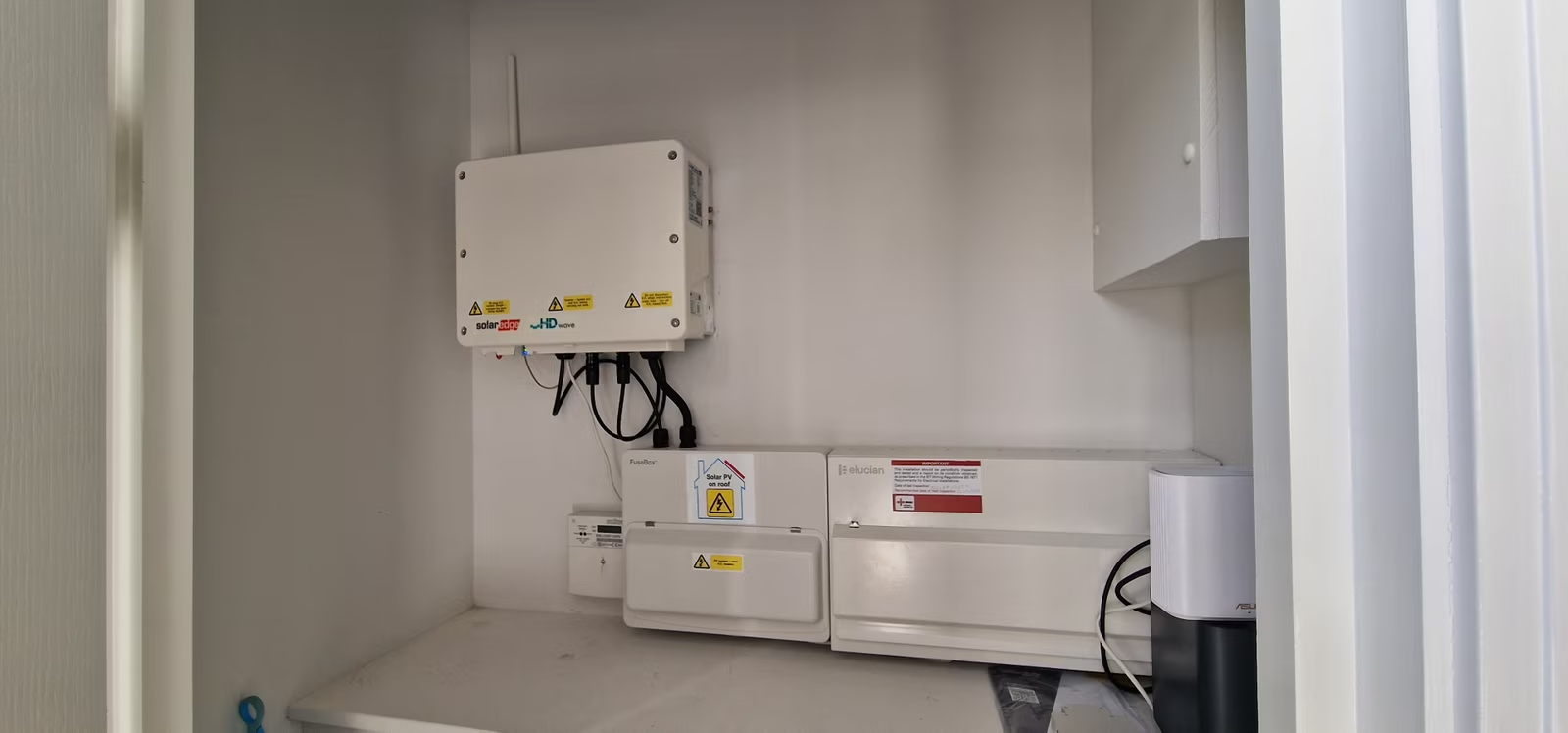
If a quote describes the system as “battery ready”, ask for that promise to be made specific. You need the inverter model, compatible storage options, a suitable proposed location and the electrical work expected later. Ask which details are confirmed today and which would require another assessment.
For existing panels, bring the original installation paperwork and monitoring details. Do not assume every battery connects in the same way. Once you have decided that storage has a useful role, EPC’s battery-selection guide covers the next set of equipment questions.
Treat power-cut backup as a separate requirement
A battery does not automatically keep your home running in a power cut. For example, Tesla’s UK Powerwall 3 non-backup configuration does not provide household backup power during an outage. The installation configuration matters as well as the product name.
If backup is one reason you want storage, name the equipment you need to keep running. Ask which circuits the quotation supports, what limitations apply and what additional work is included. Keep that resilience requirement visible in the comparison instead of treating it as an unexplained addition to bill savings.
Questions that can change the decision
Does being at home all day mean a battery is unnecessary?
It is a useful clue, not a conclusion. Ask how much electricity the proposal expects you to use directly, what surplus remains and what demand comes later. Being home does not show how much electricity you use, so start with your records rather than an occupancy label.
Does planning an electric car or heat pump make storage essential?
No. Ask for a comparison based on your household now and another showing the proposed change. Make the charging or heating schedule explicit. The recommendation should show what the battery adds under that scenario, rather than using a possible future appliance as a reason to buy storage today.
What if I do not have detailed electricity data?
Bring the bills and routine information you have. Ask the installer to label estimated inputs and explain how sensitive the recommendation is to them. Where an uncertainty could change the decision, agree what information would resolve it before accepting a specification.
A useful recommendation leaves you knowing why one option fits, what the alternative costs and what could change that answer. Explore EPC’s solar-panel options, then bring your bills and plans to a discussion about a comparable solar-only and solar-plus-battery proposal.
Sources and further reading
Sources checked 21 October 2026. Recheck changing terms before making a decision.