What should a home retrofit roadmap include?
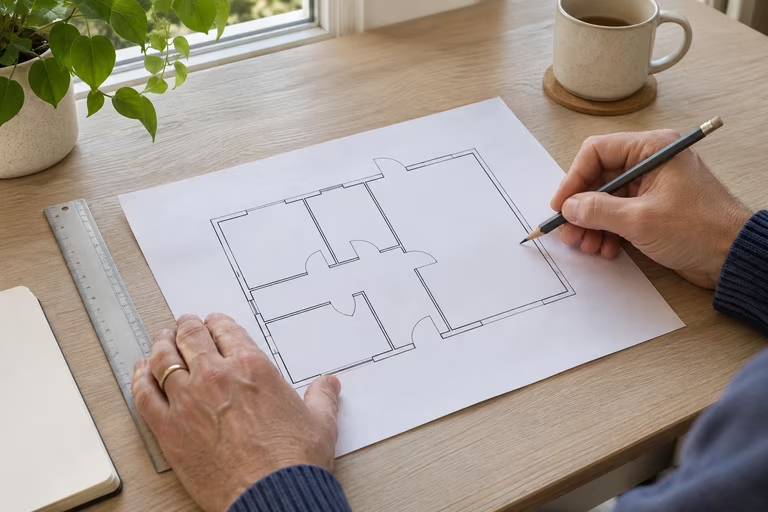
A useful roadmap starts with the improvement your home needs now. Record the outcome you want, what you can spend on the first phase, the property information you have and the questions that need a professional answer. Keep possible later upgrades in a separate part of the plan. You can use the worksheet for one improvement or return to it as your plans develop.
Retrofitting means improving an existing building. Energy Saving Trust explains why it helps to consider the whole home, even when the work happens in stages. This worksheet is an original household planning aid. It does not replace a property assessment, technical design or any required permissions.
Use the four pages in order: your brief, your survey questions, your quotation comparison and your next phase. Complete what you know, write “not known” where you need help, and date each version. For the explanation of which design decisions affect one another, read our guide to planning a whole-home energy upgrade. Here, the aim is to turn those conversations into a record you can use.
1. Agree your household brief
Choose up to three priorities and put them in order. These might be replacing unreliable gas or oil heating, finding out whether solar suits your electricity use, or deciding whether storage would add value to existing panels. Ask everyone making the decision to contribute, then identify which improvement needs attention first.
Describe the outcome: what would a useful improvement look like in everyday life? Avoid deciding the equipment before the problem has been assessed.
Describe the routine: when people are home, which rooms they use and when heating, hot water and electricity are needed.
Separate commitments from ideas: the heating replacement you need now and possible solar or battery storage later should be recorded separately. Confirmed changes should be clear design assumptions; future ideas remain options to assess.
Record the constraints: the amount available for the first phase, the urgency of any heating problem, equipment space, access and disruption you can manage.
If your budget is undecided, record that rather than choosing a number to fill the box. You can ask for options with different scopes. Keep funds already available separate from a possible grant or loan: any support, eligibility conditions and payment timing need to be confirmed before you rely on them.
2. Bring useful information, including the gaps
Gather recent energy bills or usage records, your Energy Performance Certificate if available, existing drawings and relevant equipment or installation paperwork. Note the date of each document and any changes made since it was produced. A certificate from before an extension or heating change will not describe everything as it is today.
The GOV.UK home-energy recommendation service for England and Wales asks about the property's type, age, insulation and glazing. These are useful categories for your information pack. Its recommendations are a starting point for a discussion, rather than a substitute for a project-specific survey and design.
Add observations about cold rooms, draughts, leaks, damp or condensation. Describe what you can see and when it happens; leave the diagnosis to an appropriate professional. Record unavailable information as a question. You do not need to inspect an inaccessible loft, climb onto a roof or remove equipment covers to complete a household brief.
3. Turn uncertainties into survey questions
A useful question register has three parts: the question, who will answer it and the information you need back. Add a response date when it is agreed. If more than one trade is involved, identify who will bring the answers together; do not assume another contractor has accepted that responsibility.
| Question to record | Useful answer to request |
|---|---|
| What needs checking before we replace the existing heating? | The heating and hot-water assessment, proposed equipment and alterations, and any unresolved survey items. |
| Does the heating proposal describe our home now or after confirmed changes? | A written record of the building and occupancy assumptions, and what would trigger a design review. |
| What should we record now if solar or a battery is only a later possibility? | The current equipment specification, possible compatibility questions and anything that needs assessment when that later phase is considered. |
| What roof and electricity-use information is needed before we choose solar? | Any outstanding roof checks, the proposed layout and the household-use assumptions behind the estimate. |
| Who is responsible for associated work, controls and handover? | Named responsibilities, clear inclusions and exclusions, and the documents or demonstrations to be provided. |
Read each question with the answer to request in the next column.
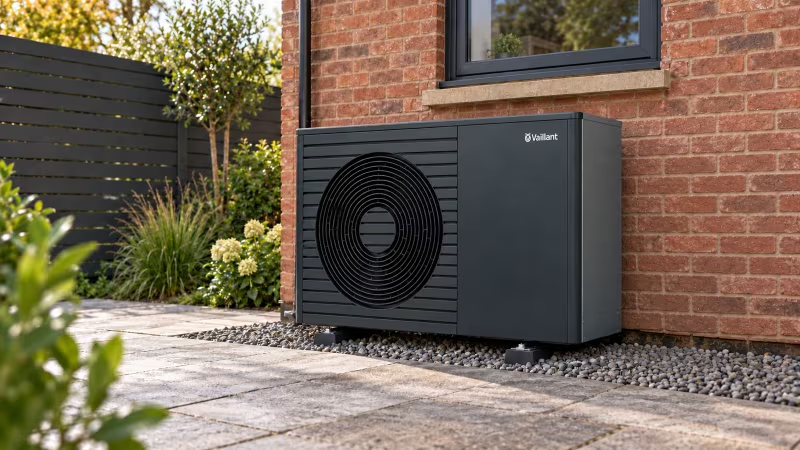
For a heat-pump proposal, ask the designer how the home's heating needs, radiators or underfloor heating, and hot-water arrangements have been assessed. Energy Saving Trust's installation guide explains these checks. Record the recommendation for your property rather than assuming that every existing radiator must change. Our heat-pump suitability guide can help you prepare further questions.
For solar, roof orientation and shading affect the proposal, while the way you use electricity matters when considering its value. Energy Saving Trust's solar guide covers these factors. Ask for confirmed future changes and possible changes to be shown separately; you can then compare solar options with and without a battery on a consistent basis.
If the survey identifies building defects, or your plans include insulation, ventilation or other building work, record who will assess that work and how it affects the installation design. Agree the responsibilities with the appropriate professionals. Do not assume a heat-pump, solar or battery quotation includes wider building work.
4. Compare the work behind each quotation
Send the same dated brief to each business quoting for the same project. If a survey changes the brief, share the revised information before comparing the final proposals. Two totals are difficult to compare when one includes enabling work or finishing that the other leaves to you.
Scope and design: which work, equipment and assumptions are included? What has still to be surveyed or decided?
Other work and costs: who pays for relevant electrical changes, access equipment, removal, making good and any work by another trade?
Performance estimates: which usage, tariff and technical assumptions underpin them? Ask what changes if those assumptions differ.
Price and payment: distinguish a firm quotation from an early estimate; record exclusions, provisional amounts, payment stages and validity dates.
Handover and aftercare: what commissioning records, certificates where applicable, control instructions, warranties and support are included?
Use page three of the worksheet to compare two proposals for the same phase. Write “included”, “excluded” or “not confirmed”, then add the detail that matters. If one proposal replaces two radiators and another replaces five, ask each designer to explain the reasoning. A different price may reflect a different scope; it is not enough on its own to choose between them.
5. Plan the next decision before the installation date
While surveys or quotations are still open, a decision date is often more useful than a firm installation date. Name the phase after what it should achieve, identify what must be resolved first, and record who will provide the missing information. Only put a start date in the confirmed column once it has been agreed.
Imagine a household whose oil boiler is becoming unreliable. They want to assess a heat-pump replacement first, while solar panels and a battery remain possible later upgrades. This is a hypothetical planning example, not an EPC customer project. Their first brief could be: “Establish a suitable replacement for the heating and hot water, show the complete first-phase cost, and record what a later solar or battery assessment would need to know.”
| Record | Example entry |
|---|---|
| Next decision | Is the proposed heat-pump replacement suitable for our home, and can we agree the first-phase scope and cost? |
| Evidence needed | Heating and hot-water assessment; radiator, pipework and electrical scope; equipment positions; full quotation and any confirmed support. |
| Responsibility | Homeowner to provide heating details and priorities; installer to confirm the survey, design, quotation and realistic timetable. |
| Budget status | Heating installation priced on its own. Any grant or finance remains conditional until confirmed. Solar and battery costs are not included in this phase. |
| Later options | Keep the installed equipment and design records. Assess solar, storage, compatibility and costs separately when the household is ready. |
| Decision outcome | Proceed, revise or defer the proposal, with the reason and date recorded. Address any urgent loss of heating separately. |
Each example is a planning entry, not a technical instruction for your home.
Keep each decision specific. Ask what information or provision is useful for a possible later upgrade, what it would cost now and what would need reassessment later. Agree and price any work before it is included. Update the brief when survey findings, household needs or the available budget change.
6. Close each phase with a usable handover record
Keep the agreed specification, approved changes, invoices and relevant completion documents together. Record where operating instructions, warranty details and monitoring access are held. Ask for a demonstration of the controls and a clear contact for questions. For heat pumps, Energy Saving Trust describes commissioning, controls guidance and documentation as parts of handover.
Book a household review after you have used the completed work. Return to the outcome you wrote down: is the room comfortable when it is occupied, can everyone use the controls, and is any follow-up needed? Record observations and unresolved points. When comparing bills or energy use, also note changes in weather, tariffs, occupancy and other equipment; a bill difference alone cannot show the effect of one measure.
Bring the latest brief, quotation questions and phase record when you talk to EPC about a heat-pump, solar or battery project. Explain what needs doing now, what you may consider later and any other work already agreed. EPC can discuss the installation scope and the next assessment step for those systems.
Home retrofit planning questions
Does the worksheet replace a professional retrofit assessment?
No. It organises what you know, what you want and the decisions still to be made. It is not a technical specification, a formal retrofit assessment or evidence of compliance with a particular standard. Ask an appropriate professional about the assessment and design your project needs.
Can I use it for just one improvement?
Yes. Complete the brief, relevant survey questions and the record for that phase. Leave unrelated sections blank or mark them not applicable. A whole-home view does not mean buying every technology or carrying out all the work at once.
What if different installers recommend different work?
Ask them to explain their assumptions and the reason for each recommendation using the same property brief. Record differences in equipment, design, enabling work and exclusions before comparing prices. If a significant technical disagreement remains unresolved, seek appropriate independent advice.
How often should I update the roadmap?
Update it after a survey finding, a change to the household brief, a revised quotation or a completed phase. Add the date and share the current version with the people whose work it affects. Possible later upgrades can remain possibilities until you have enough information to decide.
Sources and further reading
Planning sources reviewed 18 November 2026. A property assessment is needed before specifying work.